is gorilla trekking with Parkinson’s possible?
Yes, you may be able to go gorilla trekking with Parkinson’s if you can manage the physical demands of the trek with the right support. The main thing to consider is how your Parkinson’s affects your walking, balance, energy and ability to manage uneven ground.
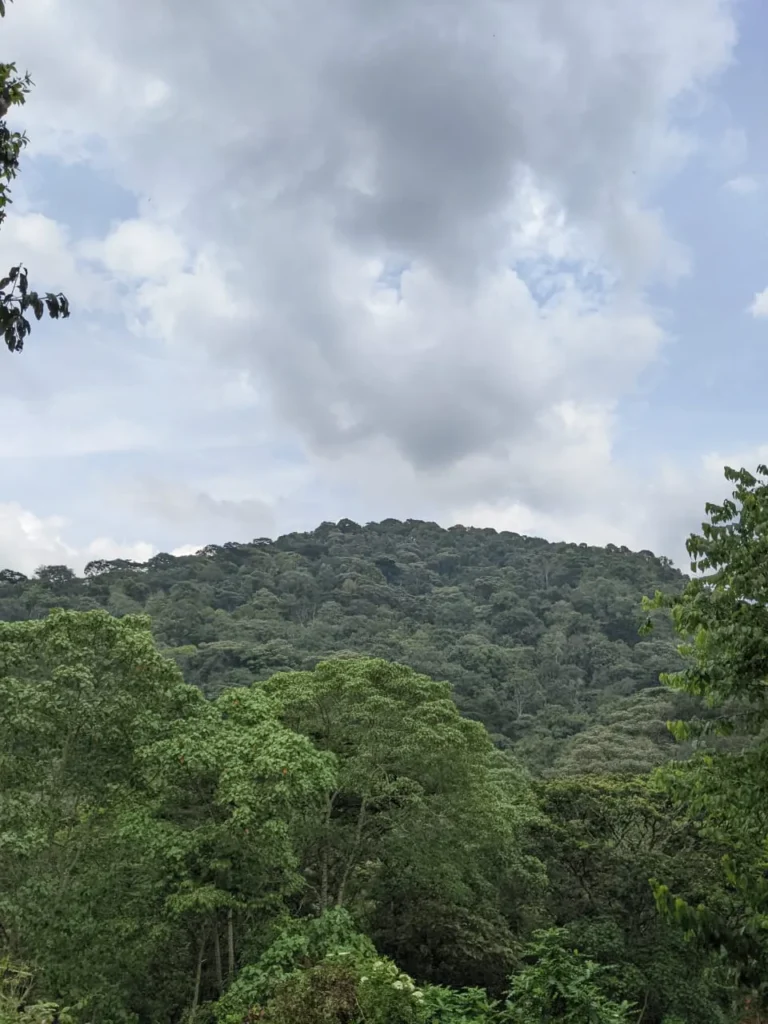
Bwindi Impenetrable National Park is beautiful, but the forest can be physically demanding. The trails are natural, so you can expect mud, tree roots, steep sections and uneven ground. The distance you walk also depends on where the gorilla family is found that day.
If you have Parkinson’s and are thinking about gorilla trekking, there is no reason to dismiss the trip without first looking at your individual situation.
Parkinson’s affects people differently. Some people have very few walking difficulties, while others may experience stiffness, tremor, balance problems, freezing or fatigue.
Before you book, think about what you can comfortably do at home.
- How far can you walk without becoming exhausted?
- Can you walk on uneven ground?
- Do you have trouble with balance?
- Do your feet sometimes feel stuck when you start walking?
- Are stairs difficult?
- Can you manage a slope?
- Do you use a walking stick or another mobility aid?
- Do your symptoms change when your medication is wearing off?
These answers help us understand what kind of safari arrangements you may need.
Planning a Gorilla Trek with Parkinson’s?
At Pomelo-Ibis Adventures, we take time to understand your mobility, walking pace, stamina and the support you may need in Bwindi. Tell us about your needs before you travel, and we can help you plan the trek around you.
Explore Our Mobility GuideWhat makes Bwindi difficult for someone with Parkinson’s?
The biggest challenge is the ground.
Gorilla trekking takes place in natural forest. There are no paved paths leading all the way to the gorillas.
You may walk over:
- Muddy ground
- Tree roots
- Slopes
- Wet leaves
- Uneven paths
- Narrow sections of trails
The forest can also be wet, particularly during rainy periods.
The gorillas are wild animals and move through their natural habitat, so the ranger team cannot tell you in advance exactly how far you will walk.
This is why we ask about your mobility before planning your trek.
Can balance problems make the trek harder?
Yes. That is why we strongly encourage a sedan chair and porters. Balance problems can make Bwindi’s uneven and slippery trails more difficult.
If you normally walk well on smooth roads but struggle on rough ground, tell us before you book.
A walking stick or other mobility aid that you already use may be helpful. A porter can also assist with carrying your belongings and provide practical support during the walk.
Your guide and ranger team should also know about any important mobility concerns before the trek starts.
What if I experience freezing?
Freezing can be a concern on a forest trek because you may suddenly have difficulty starting or continuing a step.
If you experience freezing, tell your doctor and safari operator before travelling. It is also helpful to let your travelling companion and guide know what normally helps you when it happens.
If you need to stop for a moment, talk to the ranger and stop.
Will Parkinson’s fatigue affect my gorilla trek?
It can. Fatigue is common among people living with Parkinson’s and can make a physically demanding day harder to manage. Long flights, road transfers, early mornings and poor sleep can add to the problem. We therefore recommend giving yourself enough time to rest before your gorilla trek.
A good itinerary may include:
- A rest day after your international flight
- Comfortable accommodation near the gorilla trekking area
- A lighter day before trekking
- Enough time to take your medication as scheduled
- Time to rest after trekking
You do not need to fill every day of your holiday with activities. If gorilla trekking is the main reason you are coming to Uganda, it makes sense to arrive at the forest with enough energy to enjoy it.
The Parkinson’s Foundation also recommends allowing extra time while travelling, planning rest periods and arranging activities around energy levels.
Your doctor can also advise you about managing your medication during the journey.
How should I manage my Parkinson’s medication during the safari?
Keep your medication with you and continue taking it according to your prescribed schedule. Do not put all your medication in checked luggage.
We recommend that you:
- Keep your medication in your hand luggage
- Keep it in its original labelled containers
- Carry a copy of your prescription
- Carry enough medication for the full trip
- Pack extra medication in case of delays
- Keep your medication accessible during long transfers
- Use an alarm if you normally rely on reminders
If you are travelling across time zones, ask your doctor how you should manage your usual medication intervals.
Should I tell my safari company that I have Parkinson’s?
Yes. Tell us before you book. You do not need to give us your entire medical history. What we need to understand is how Parkinson’s affects you when you travel and walk.
For example:
| What you tell us | What we can plan for |
|---|---|
| I can comfortably walk for two hours | Trek expectations |
| I sometimes freeze | Walking support |
| I use a walking stick | Mobility arrangements |
| I struggle with steep slopes | Sector and route discussion |
| I tire quickly | Rest and activity planning |
| I need medication at certain times | Safari timing |
This information is much more useful than simply telling us that you have Parkinson’s.
You can also read our detailed guide on gorilla trekking for older people, senior, immobile and disabled travellers, where we explain porters, additional support and carried-chair arrangements in more detail.
Which Bwindi sector is best if I have mobility problems?
There is no single Bwindi sector that we can promise will be easy.
Buhoma is often a good sector to discuss with travellers who have mobility concerns because it has established tourism infrastructure and several accommodation options nearby.
Rushaga can also be considered because of the number of gorilla families in the area.
Ruhija and Nkuringo can involve more challenging terrain, so we would look carefully at your mobility before recommending them.
| Sector | Mobility considerations |
|---|---|
| Buhoma | A practical option to discuss for travellers with mobility concerns |
| Rushaga | Worth considering depending on your mobility and gorilla family allocation |
| Ruhija | Some routes can be challenging |
| Nkuringo | Known for steep and demanding terrain |
The final difficulty still depends on where the gorillas are found. That is why we do not promise a particular walking distance or an easy trek simply because you have chosen a particular sector.
Planning Your Gorilla Trek?
Our complete gorilla trekking guide covers permits, trekking areas, preparation and what to expect in Uganda.
Explore the Gorilla GuideWould a fly-in safari make the trip easier?
A fly-in safari does not change the terrain inside Bwindi but surely reduces some of the travel time around the trekking experience, giving you plenty of time to rest before and after the trip. It can make the overall journey less tiring because you spend less time travelling by road.
What if my Parkinson’s symptoms are worse on the morning of the trek?
Tell your guide. If you wake up feeling significantly worse than usual, do not hide it because you are worried about disappointing the group.
Your health comes first. Your guide can discuss the situation with you and the ranger team so that the day’s arrangements can be considered properly.
This is another reason to leave some flexibility in your itinerary.
What should I tell Pomelo-Ibis before I book?
Tell us about your everyday walking ability.
For example:
- How far can you normally walk?
- Do you use a walking stick?
- Do you freeze while walking?
- Do you have balance problems?
- Are stairs difficult?
- Are slopes difficult?
- When do you normally have the most energy?
- Do you need medication at particular times?
- Are you travelling with someone who assists you?
- Would you consider a porter or carried chair if necessary?
From there, we can look at the accommodation, transfers, trekking sector and support arrangements together.
If you would like to spend less time on Uganda’s long road transfers, our 4-day fly-in double gorilla safari is another option to consider.
Prefer to Spend Less Time on the Road?
See our 4-day fly-in double gorilla safari and spend more of your time experiencing Uganda’s gorillas.
View the 4-Day Fly-In Safari