
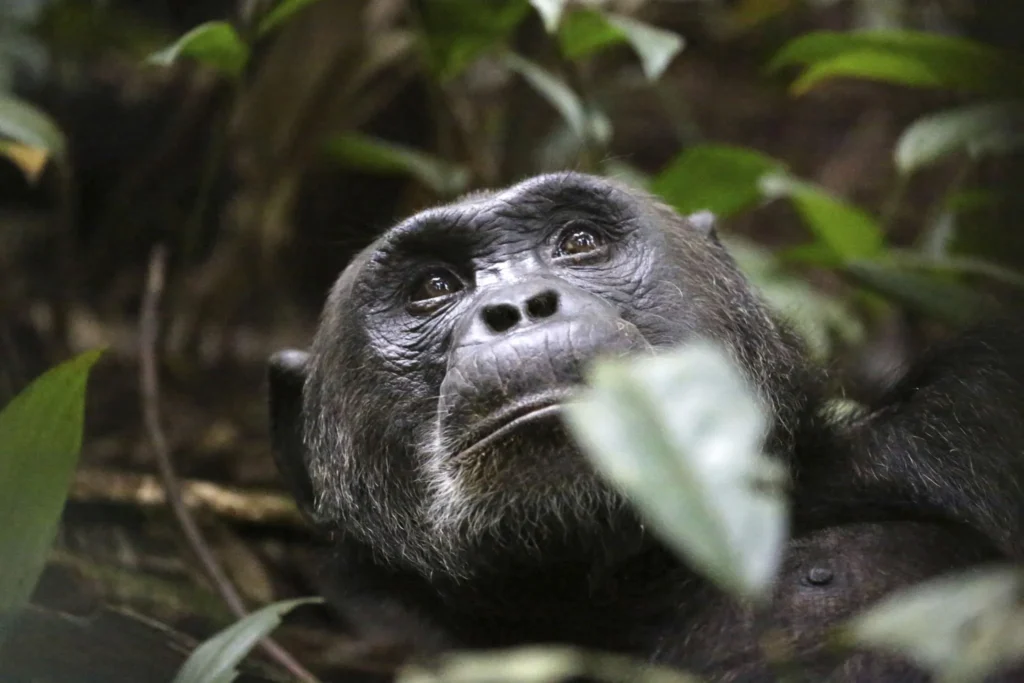
The Ngogo Chimpanzee War: Inside the Brutal Civil War of Kibale National Park
The Ngogo Chimpanzee War: Inside the Brutal Civil War of Kibale National Park For over twenty years, the Ngogo community in Uganda’s Kibale National Park was a scientific marvel. It was the largest chimpanzee group ever recorded in the wild, boasting over 200 members. They were a peaceful, unified super-group. However, that peace was shattered by a historic and violent civil war that has redefined our understanding of primate behavior. In April 2026, a groundbreaking study published in the journal Science confirmed what researchers had feared. The community has permanently split into two warring factions: the Western group and the Central group. This is not just a territorial dispute; it is a lethal conflict between former friends and allies. The Rise and Fall of the Ngogo Super Group To understand the war, we must first understand the community’s history. For decades, the Ngogo chimps lived in a state of harmony. They shared food, protected one another from predators, and groomed their allies. Scientists believe their massive size was their greatest strength. Because they were so numerous, they could easily dominate their neighbors and expand their territory. This led to a period of unprecedented reproductive success and abundance. However, by 2015, the group’s size became its biggest liability. Why the Community Split According to lead researcher Aaron Sandel and John Mitani, several factors contributed to the fission or split; Overcrowding: With over 200 individuals, feeding competition intensified. Loss of Leadership: In 2014, several key older males died. These males acted as social bridges, keeping distant parts of the forest connected. Power Vacuums: The death of these peacemakers allowed younger, more aggressive males to seize control of local factions. The Ngogo Chimpanzee War turns extra violent What makes the Ngogo chimpanzee war so haunting is the nature of the aggression. Usually, chimpanzees save their violence for strangers from outside groups. At Ngogo, the victims are individuals who grew up together. Between 2018 and early 2026, researchers documented 28 confirmed deaths linked to this internal war. This includes 8 adult males and 20 infants. The Western group, despite being smaller initially, has been the primary aggressor. They launch coordinated raids into Central territory, looking for isolated individuals to ambush. Strategic Attacks and Border Patrols The Western chimps exhibit terrifyingly human-like military tactics. They move in silence, single-file, through the undergrowth. They avoid snapping twigs. When they find a member of the Central group, they use their numerical advantage to pin the victim down. Professor John Mitani, who has studied these chimps for decades, noted that these attacks are often calculated. The Western group targets the males of the Central group to systematically weaken their rival’s defense. Want to see Kibale’s chimpanzees in person? While the Ngogo community is a research-only zone, you can still trek habituated chimpanzee groups in Kibale National Park with expert guides. We’ll design a custom primate safari for you, free of charge. Plan My Chimpanzee Trek Or contact us directly: Email: lindah@pomelo-ibisadventures.com · Call/WhatsApp: +256 784 240 480 Biological Roots of The Ngogo Chimpanzee Civil War This conflict is only the second civil war recorded in chimpanzee history. The first was the Gombe War observed by Jane Goodall in the 1970s. However, the Ngogo war is much larger in scale and more clearly documented. Challenging the Human Narrative In human history, we often blame war on religion, politics, or ethnicity. The Ngogo war challenges this idea. Chimpanzees do not have flags, bibles, or political parties. Yet, they are capable of the same tribalism and collective violence. This suggests that polarization is a deep-seated biological drive. When social ties break down, group identity becomes the new priority. For the Western group, the Central group is no longer “us”. They are “them.” The Current State of Kibale National Park (2026) As of today, the Western group has effectively won the first phase of the war. Through persistent violence, they have reduced the Central group’s numbers and expanded their own territory. Western Group Size: 108 members (and growing). Central Group Size: 76 members (declining). The Central group now faces the lowest infant survivorship ever recorded in a wild chimp community. The stress of constant patrols and raids has made it nearly impossible for them to raise young safely. Lessons for Human Society Researchers like Aaron Sandel stop short of calling it a human civil war, but the parallels are impossible to ignore. The Ngogo conflict teaches us that peace is fragile. It relies on social bridges; the individuals who can talk to both sides and maintain relationships across boundaries. When those bridges fall, and a group becomes too large or too polarized to communicate, violence often follows. The chimps of Kibale are a mirror held up to the human condition, showing us that our capacity for war may be older than our species itself. Is the Ngogo chimp war still happening? Yes. As of April 2026, the two groups remain hostile. While the frequency of raids has slowed, the territorial boundaries are strictly enforced through violence. Can I visit Kibale National Park to see the chimps? Yes, absolutely. Kibale is open for chimpanzee trekking. However, the Ngogo community is located in a remote research-only area of the park. Tourists usually visit the Kanyanchu group, which is habituated but not part of the active civil war. Where can I watch the documentary about these chimps? The early stages of this conflict were famously captured in the Netflix series Chimp Empire (2023). It provides an incredible visual background to the scientific data published in 2026. How do I book a chimpanzee habituation or trekking tour? Very simple. Simply reach out to us on email at lindah@pomelo-ibisadventures.com, call us on +256784240480 , WhatsApp; +256784240480 and we design for you a custom chimpanzee habituation/trekking trip, free of charge! Yes. As of April 2026, the two groups remain hostile. While the frequency of raids has slowed, the territorial boundaries are strictly enforced through violence. Yes, absolutely. Kibale is open for chimpanzee trekking. However, the Ngogo community
The Ngogo Chimpanzee War: Inside the Brutal Civil War of Kibale National Park Read More »