Deciding between gorilla trekking Uganda vs Rwanda usually comes down to three things: how much you want to spend, how much time you have, and how much physical challenge you actually want out of the trip. We run fly-in gorilla trekking trips out of Uganda at Pomelo-Ibis Adventures, and we get some version of this question from nearly every client before they book.
This guide answers it properly, with real numbers rather than the vague “it depends” answer most sites give you.
What is Gorilla Trekking and Why Is It So Popular?
Gorilla trekking is a regulated, guided hike into high-altitude, dense African rainforests to locate and observe habituated wild mountain gorillas (Gorilla beringei beringei).
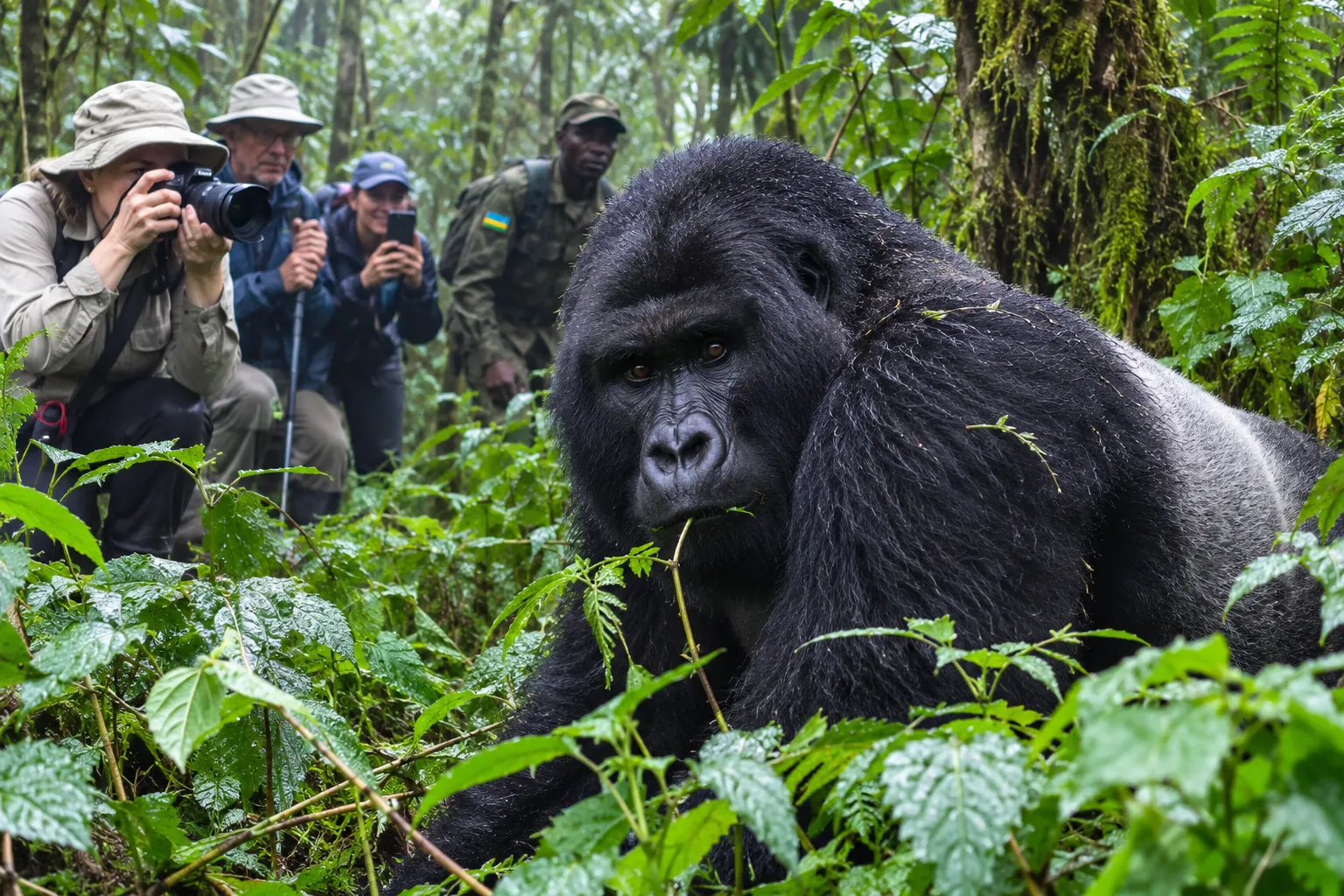
Unlike safari game drives from a 4×4 vehicle, gorilla trekking takes place entirely on foot. Trekkers hack through thick underbrush, navigate steep terrain, and trace dynamic forest paths alongside expert trackers and rangers until they locate a designated gorilla family. Once the group is found, visitors are permitted exactly one hour to quietly observe, photograph, and experience the gorillas as they forage, play, and interact.
Defining Gorilla Trekking and Its Popularity
Gorilla trekking is a permit-controlled hike into high-altitude rainforest to spend time with a habituated wild mountain gorilla family. It is not a zoo visit and not a game drive. You walk in on foot, guided by trackers who have usually located the family’s general position since early morning, and once you find them you get a strict one-hour window to observe from a safe distance.
That one hour is the entire appeal. Mountain gorillas do not survive in captivity, so Uganda, Rwanda and DRC are the only places on earth you will ever see one. You are looking at an animal that shares roughly 98% of its DNA with you, at a distance the Uganda Wildlife Authority (UWA) sets at a minimum of 10 meters for the protection of both the gorillas and visitors. When a juvenile gets curious and wanders closer than that, which happens more often than the rulebook suggests, it stops being an item on a bucket list and becomes something people genuinely struggle to describe afterward.
Demand has followed accordingly. Daily permits are capped by park authorities in both countries, which keeps the experience exclusive but also means booking ahead matters more than most travelers expect, particularly in July, August, and December.
The Significance of Gorilla Trekking in Uganda and Rwanda
Uganda and Rwanda are two of only three countries on earth where wild mountain gorillas exist (the third being the Democratic Republic of Congo, where trekking is not currently advisable for most travelers). Uganda holds close to half of the world’s remaining mountain gorilla population, spread across Bwindi Impenetrable National Park and Mgahinga Gorilla National Park. Rwanda’s population is concentrated in Volcanoes National Park, part of the wider Virunga Massif that also crosses into Congo.
Both countries built their entire high-end tourism economy around this single species. That is not an exaggeration. Permit revenue is the primary reason mountain gorillas are one of the only great ape populations on the planet with a growing wild population instead of a shrinking one.
Conservation Efforts Tied to Gorilla Tourism
Forty years ago, fewer than 250 mountain gorillas were left in the wild. Today that number is past 1,000, and permit fees are the direct reason why. Every permit sold funds three things:
- 24/7 ranger patrols that sweep the forest daily to remove poachers’ wire snares, which remain the single biggest threat to gorilla survival
- Gorilla Doctors field veterinary teams, who treat snare injuries, respiratory illness, and territorial fight wounds directly in the jungle rather than requiring the animal to be moved
- Community revenue-sharing, where Uganda returns 20% of park entry fees to communities bordering Bwindi and Mgahinga for schools, clean water, and roads, while Rwanda allocates 10% of gorilla tourism revenue to community projects around Volcanoes National Park
If you book a trek, you are not just buying an encounter. You are functionally paying for the anti-poaching patrol that walked that forest this morning
Comparing Uganda and Rwanda for Gorilla Trekking
The honest answer is that these are two different products wearing the same marketing category. Uganda is a physical, immersive expedition. Rwanda is a fast, comfortable, high-end excursion. Neither is better. They suit different travelers.
| Factor | Uganda (Bwindi / Mgahinga) | Rwanda (Volcanoes National Park) |
|---|---|---|
| Permit cost | $800 USD | $1,500 USD |
| Terrain | Dense, steep, equatorial jungle | Bamboo forest, comparatively open |
| Trek duration | 2 to 7 hours, harder to predict | Generally shorter and less steep |
| Access from international airport | 10–11 hrs by road from Entebbe, or under 90 minutes by fly-in charter | 2.5–3 hrs by paved road from Kigali |
| Overall feel | Rugged, expedition-style | Polished, time-efficient, luxury-forward |
The road-transfer numbers above are what most sites quote, and they’re accurate for self-drive or standard road transfer clients. What most comparison articles leave out is that Uganda’s access problem is solvable. We book clients from Entebbe into Bwindi by chartered fly-in with AeroLink and other local partners in under 90 minutes, which removes the single biggest argument in Rwanda’s favor: convenience. Once that gap closes, the decision comes down to budget and how much jungle you actually want under your boots.
Accessibility, Terrain, and Wildlife Experience
Rwanda wins on ease, full stop. Volcanoes National Park is a short, paved drive from Kigali, the terrain inside the park is more forgiving, and it’s realistic to fly in, trek, and fly out inside three days. That convenience is exactly what you’re paying the extra $700 in permit cost for.
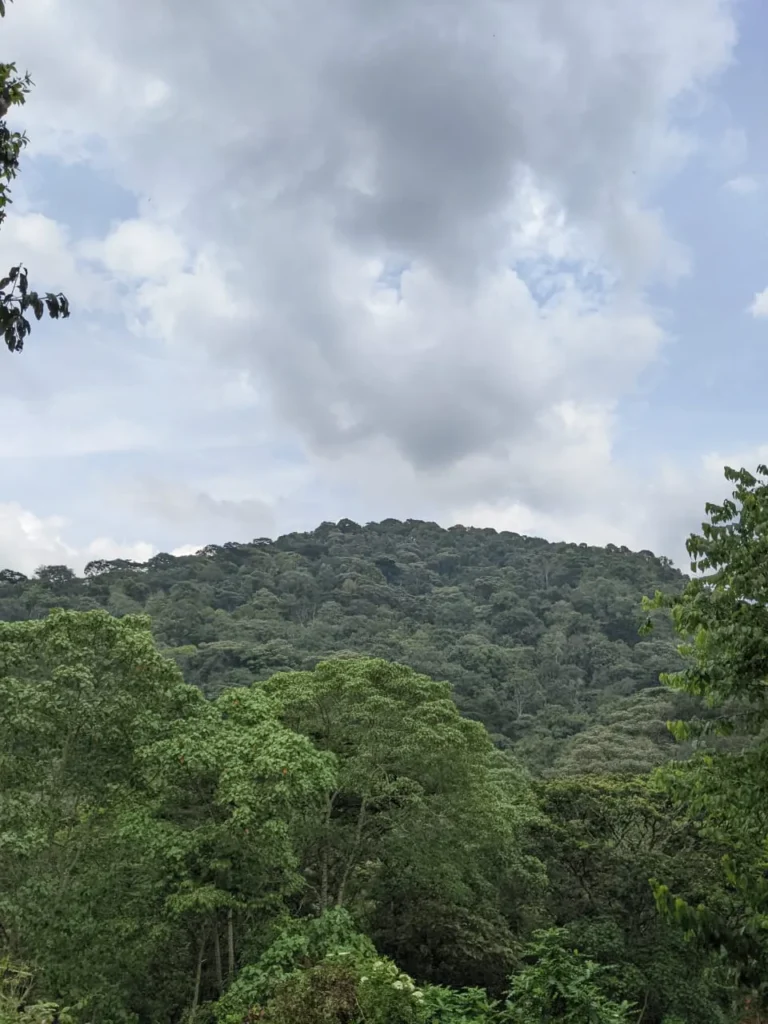
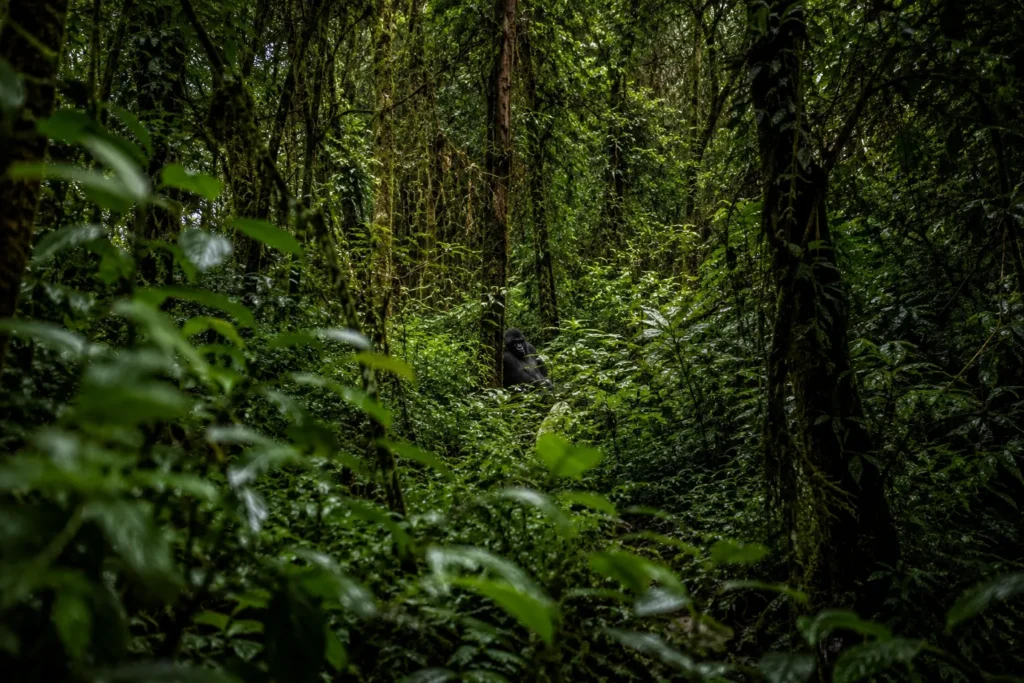
Bwindi is named accurately. “Impenetrable” is not marketing language, it’s a description of vegetation so dense that trackers sometimes cut new paths with machetes on the day of your hike. Elevation in Bwindi ranges roughly from 1,160 to 2,600 meters, and gorilla families move daily, so trek length is never guaranteed until rangers radio in a location that morning. This is the version of the experience for someone who wants to earn the encounter, not just arrive at it.
Wildlife-wise, both parks deliver the same core experience: an hour with a habituated gorilla family at close range. Bwindi additionally holds significant forest bird and primate diversity if you’re combining the trek with broader birding or forest walks, which is common on longer Uganda itineraries.
Notable Parks in Both Countries
Uganda:
- Bwindi Impenetrable National Park, split into four trekking sectors (Buhoma, Ruhija, Rushaga, Nkuringo), home to the majority of Uganda’s habituated families
- Mgahinga Gorilla National Park, smaller and quieter, part of the same Virunga volcanic range as Rwanda’s park
Rwanda:
- Volcanoes National Park, home to all of Rwanda’s gorilla trekking and the setting for Dian Fossey’s original research
If your itinerary allows it, some travelers combine both countries into a single trip. We build these Uganda-Rwanda combination itineraries regularly for clients who want the full comparison rather than picking one.
Already leaning toward Uganda?
Cost Considerations for Trekking in Both Countries
Permit Cost Overview
The permit is the baseline, non-negotiable cost and the clearest apples-to-apples comparison between the two countries:
- Uganda: $800 USD per person, purchased through UWA (we book these directly through UWA’s portal rather than through resellers, which avoids markup and confirms availability in real time)
Rwanda: $1,500 USD per person, purchased through the Rwanda Development Board
Both permits cover exactly one trek and one hour with the gorillas. Neither price includes park entry fees, guide gratuities, or porter fees, all of which are separate line items.
Additional Expenses: Accommodation and Transport
The permit is rarely the largest line item on the invoice once you factor in lodging. Bwindi and Volcanoes National Park both sit near a concentration of high-end lodges built specifically around gorilla tourism, and nightly rates at that tier routinely exceed the permit cost itself. On the Rwanda side, properties like Bisate Lodge and One&Only Gorilla’s Nest sit in the ultra-luxury bracket. On the Uganda side, Sanctuary Gorilla Forest Camp sits directly inside Bwindi forest at a comparable tier.
Transport is the other major swing factor. Road transfer to Bwindi from Entebbe is long enough that most operators build in an overnight stop, adding a night’s accommodation you wouldn’t otherwise need. Fly-in charter removes that extra night entirely but costs more upfront than a shared road transfer. Rwanda’s short paved drive from Kigali generally avoids this tradeoff altogether, which is part of why its overall trip cost per day can end up closer to Uganda’s than the permit gap alone suggests.
Emergency evacuation cover is worth budgeting for on either side of the border. We include BARSOS emergency evacuation coverage on our Uganda treks, and any operator you book with should be able to tell you plainly whether evacuation is included or an add-on.
Value for Experience and Pricing Trends
Rwanda’s $1,500 permit is not an accident of market pricing. It reflects a deliberate low-volume, high-yield strategy: fewer visitors, higher spend per visitor, less pressure on the park. Uganda has held its price lower, which keeps the experience more accessible without reducing the conservation model’s effectiveness, since Uganda’s higher gorilla population supports more daily permits across more sectors.
In practical terms: if your budget is the primary constraint, Uganda gives you the same core encounter for $700 less per person, and closing the accessibility gap with a fly-in transfer largely neutralizes Rwanda’s convenience advantage. If your constraint is time rather than money, Rwanda’s short transfer wins outright. Demand in both countries has trended upward over the past several years, and neither government shows signs of lowering prices, so booking further in advance is becoming more important than it was five years ago, not less.
You’ve seen the real numbers, permit cost, lodging tier, transfer cost. The only thing left is matching them to your actual travel dates.
What to Expect During a Trek
Trekking groups are capped at 8 visitors per gorilla family per day, a rule set by both UWA and the Rwanda Development Board specifically to limit stress on the animals. Your day starts with an early morning briefing at the park headquarters, where you’re assigned to a specific family based on fitness level and ranger updates on that family’s recent location.
From there it’s a guided hike that can run anywhere from 2 to 7 hours round trip depending on where the family has moved. Once trackers locate them, you get exactly 60 minutes with the group before heading back out. There is no way to extend that hour, and no way to predict in advance exactly how long the hike itself will take, since gorillas don’t stay put for anyone’s itinerary.
Physical Requirements and Preparation Tips
Be honest with yourself about fitness before choosing Bwindi over Volcanoes. Bwindi’s terrain is steep, often muddy, and can involve real scrambling on unstable ground. Rwanda’s bamboo-forest terrain is comparatively gentler but still not a flat walk.
A few things we tell every client before they trek:
- Book a porter regardless of fitness level. It’s a small cost that directly supports the local community and genuinely changes the experience on steep terrain.
- Wear waterproof hiking boots with ankle support, not trail runners.
- Bring gardening gloves for gripping vegetation on the way up.
- Pack layers. Mornings at altitude are cold, midday can be humid, and it can rain with no warning in either park.
- If you want photos, bring your phone or camera fully charged. Flash photography is prohibited to avoid startling the gorillas, but standard photos are permitted, and only calls and internet access are meant to be switched off, not the camera itself.
Guides, Safety, and What Wildlife Encounters to Expect
Every trek is led by armed rangers and experienced guides who track the gorillas’ movement daily and know individual animals by name and temperament. Their job covers both navigation and your safety, including maintaining that 10-meter distancing rule if a gorilla doesn’t voluntarily maintain it themselves, which younger gorillas in particular tend to ignore.
What you’ll actually see in that hour varies by family and day. Some groups are settled and calm, giving you long, quiet observation of a silverback resting or a mother grooming an infant. Others are more active, foraging or moving through the group’s territory while you follow at a respectful distance. Neither outcome is more or less “successful.” The hour is the hour, and every group we’ve sent in has come back saying the same thing in different words: it goes by faster than they expected, and no amount of reading about it beforehand fully prepared them for actually being there.
If you’re weighing gorilla trekking Uganda vs Rwanda and want a straight answer based on your budget, dates, and fitness level rather than a generic comparison chart, talk to us directly. We book both sides of the border and will tell you honestly which one fits your trip better, even if that means recommending the option that isn’t ours.