This is the only gorilla trekking packing list you need
I have taken many clients into Bwindi Impenetrable National Park for gorilla trekking, and I have watched what people actually use once they leave the briefing point and enter the forest. We’ve seen trekkers walk comfortably with the simple walking sticks provided locally. I have seen people trek without gaiters, with their trousers tucked into their socks. I have seen people carry far too much and realise halfway through the trek that most of it was unnecessary.
So this is not a packing list assembled from a catalogue.
It is the list I would give a client based on what I have personally seen work in Bwindi, combined with guidance from Uganda’s wildlife authorities and practical advice from experienced people working around gorilla trekking.
And there is an important distinction:
Many items in the gorilla trekking packing list are essential. Some strongly recommended. Other are simply optional.
Knowing the difference can make your trek lighter, easier and more enjoyable.
UWA says gorilla trekking in Uganda generally requires moderate fitness and can last approximately 2–7 hours, depending on the trek. That is long enough to make poor footwear or unnecessary weight genuinely irritating, but it does not mean you need to enter Bwindi looking like you are preparing for an expedition.
What is the only Gorilla Trekking packing list you need?
Here is the short version before we get into the details.
For the actual trek, I recommend that you carry:
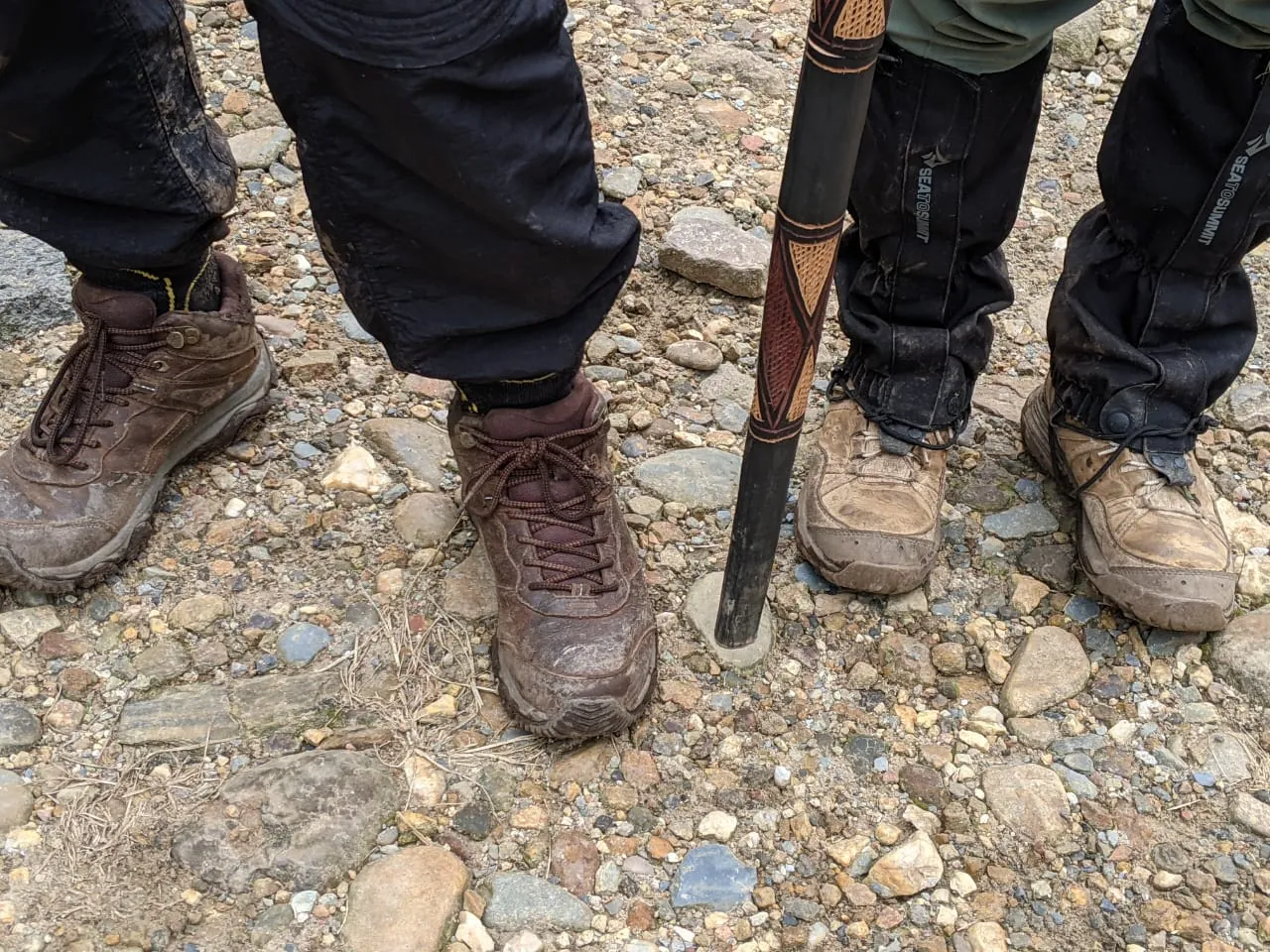
- Sturdy, comfortable walking boots
- Long trousers
- A long-sleeved shirt
- Gaiters
- A light rain jacket
- About 2 litres of drinking water
- A few small, dry snacks
- A small daypack
- A non-cotton cloth for wiping sweat
- Insect repellent, if you want to use it
- Your personal medication, if applicable
- A camera or phone, if you want photographs
- Your permit or booking documentation as required by your operator
That is the core.
1. Gorilla Trekking Boots: The One Thing I Would Not Compromise On
You do not need to fill a large backpack with every piece of outdoor equipment you have ever bought.
And if you hire a porter, you can make this even easier.
If there is one part of your gorilla trekking packing list where I will be firm, it is footwear.
Wear sturdy, comfortable walking boots with good grip.
Bwindi is not a paved walking trail. You may encounter steep ground, slippery sections, roots, mud, vegetation and uneven surfaces. UWA describes gorilla trekking as a moderate-fitness activity that can last several hours.
Your boots therefore need to be comfortable enough for prolonged walking and sufficiently sturdy for uneven terrain.
Do not buy new boots the night before your gorilla trek
This is one of the simplest pieces of advice I give our guests.
Wear your boots before you travel.
Walk in them several times. Take proper walks in them. Let your feet get used to them.
Why?
Because the last thing you want is to discover halfway into Bwindi that the boot you thought was comfortable in a shop is rubbing your heel raw.
Blisters can turn an extraordinary gorilla encounter into an uncomfortable exercise in endurance.
So, if you are buying new trekking boots for Uganda, break them in before your trip.
2. Gorilla Trekking Gaiters: Recommended, But Not a Requirement
Here is where I disagree with the idea that every item on a packing list is an absolute necessity.
Gaiters are highly recommended. They are not something I would describe as a requirement for everyone.
I have seen guests trek successfully without gaiters.
Some simply tuck their trousers into their socks. They trek, they see the gorillas and they return.
So, yes, you can trek without gaiters.
But I still recommend them.
Gaiters help cover the gap between your trousers and boots and can keep mud, vegetation and debris from getting into your footwear. Many gorilla trekking packing lists strongly recommend them.
For me, the logic is simple:
Are gaiters absolutely necessary? No.
Can they make your trek more comfortable? Absolutely.
If you already own a lightweight pair, bring them.
If you do not, do not panic.
3. What to Wear for Gorilla Trekking: Long Sleeves and Long Trousers
Your gorilla trekking clothes should be practical rather than fashionable.
I recommend:
- Long trousers
- A long-sleeved shirt
- Comfortable socks
- Sturdy walking boots
- Neutral-coloured clothing
Long clothing gives your arms and legs more protection from vegetation, insects and the forest environment.
It also makes sense from a practical point of view: Bwindi is dense forest, not an open savannah game drive.
Choose neutral colours for gorilla trekking
Stick to practical, neutral colours such as:
- Khaki
- Brown
- Grey
- Olive
- Muted green
- Other subdued earth tones
You do not need to dress entirely in camouflage.
In fact, do not wear camouflage or military-style clothing.
The objective is simple: dress comfortably and unobtrusively for a forest environment.
4. Do You Need a Rain Jacket for Gorilla Trekking?
Yes. Bring one.
But it does not need to be enormous.
A lightweight rain jacket that you can put on quickly is one of the most useful things in your daypack.
Why?
Because Bwindi is rainforest.
And here is another myth worth correcting:
Dry Season Does Not Mean No Rain in Bwindi
Please do not interpret “dry season” as “there will be no rain.”
Bwindi can surprise you.
You can begin your trek under sunshine and encounter rain later. You can also have a completely different experience from someone who trekked the previous day.
Uganda Wildlife Authority describes Bwindi as a montane forest environment, and UWA’s broader information on Uganda’s forests reflects the country’s generally wet conditions.
Other current gorilla trekking guidance likewise warns that rain can occur even during the traditionally drier months.
So my advice is uncomplicated:
Carry the rain jacket.
You may never put it on.
But if Bwindi decides to rain, you will be very happy that you did.
5. How Much Water Do You Need for Gorilla Trekking?
I recommend carrying about 2 litres of drinking water.
You may not drink all of it.
That is fine.
The point is to have enough water for a trek that could take several hours.
Other current Uganda gorilla trekking guidance similarly recommends around two litres of water.
A reusable bottle is perfectly practical.
You do not need to carry an enormous hydration system simply because somebody online said that every trek requires one.
Two litres is a sensible working recommendation for our guests.
6. Do You Need Packed Lunch for Gorilla Trekking?
Here is another part of my advice that may be slightly controversial:
I would rather you carry small dry snacks than a full packed lunch into the forest.
Yes, many packing lists recommend packed lunch.
And yes, your lodge may prepare one.
But here is what I have observed with our guests:
By the time some people actually get around to eating the packed lunch, it is cold.
And after several hours in the forest, what many people really want is not a cold packed meal.
They want a shower.
They want to get warm.
And then they want a hot meal.
That is what I prefer for our guests.
What snacks should you carry?
Keep it simple.
A few small, dry, easy-to-eat snacks are enough:
- Nuts
- Dried fruit
- Energy bars
- Crackers
- Biscuits
- Other familiar dry snacks you know you tolerate well
You are not packing a picnic.
You are carrying something to keep you going if you get hungry.
Small snacks. Small bag. Less weight.
7. Your Gorilla Trekking Daypack Should Be Small
This is where many blogs writing about the ultimate gorilla trekking packing list unnecessarily make it complicated.
You do not need a giant hiking backpack for the actual gorilla trek.
A small, comfortable daypack is enough for most people.
Put inside it:
- Water
- Light rain jacket
- Small snacks
- Camera or phone
- Personal medication
- Small personal essentials
- Insect repellent, if using it
- A cloth for wiping sweat
And that is about it.
Remember: the trek itself may last several hours.
The less unnecessary weight you carry uphill, the better.
8. Should You Hire a Porter for Gorilla Trekking?
Yes. I highly recommend it.
A porter is not only for people who consider themselves unfit.
A porter can carry your daypack and reduce the weight you personally have to manage through steep and uneven terrain.
More importantly, hiring a porter puts money directly into the hands of people living around the park.
UWA’s conservation model explicitly recognises the importance of communities surrounding protected areas, including revenue-sharing arrangements intended to improve local livelihoods.
How much does a gorilla trekking porter cost?
For our guests, we recommend budgeting approximately US$20–25 for a porter, depending on the arrangement and tipping.
Prices and tipping practices can vary, so confirm the current amount with your safari operator before trekking.
Think of the porter as more than someone carrying your bag.
You are also supporting someone whose livelihood is connected to tourism around Bwindi.
And honestly?
US$20–25 is a small price to make several hours in a steep forest easier.
9. Do You Need to travel with a Walking Stick from home?
Not necessarily.
This is another place where internet packing lists can make things sound more complicated than they are.
I have taken many guests gorilla trekking who used the local walking sticks provided at the park.
They trekked successfully.
Guests who bring their own trekking poles can certainly use them if they prefer them. But I would not tell a first-time gorilla trekker that they must go out and buy an expensive trekking pole before coming to Uganda.
If you like your own walking pole, bring it.
If you do not have one, do not panic.
Ask about the locally available walking sticks when you arrive for your trek.
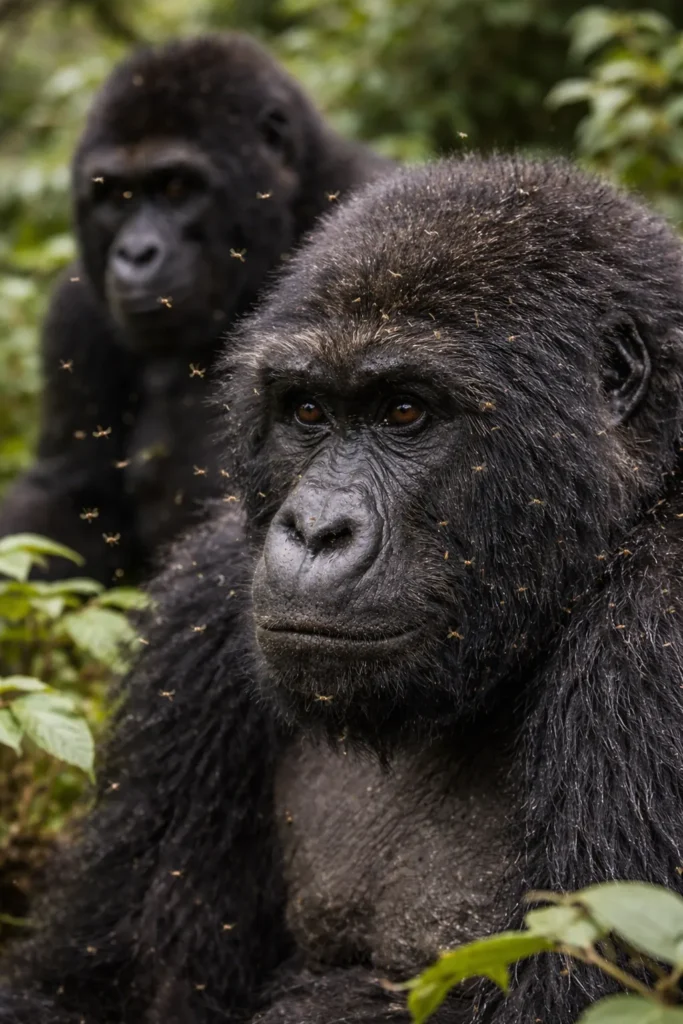
10. Gorilla Trekking and Sweat Bees: What We Actually Tell Our Guests
Yes, there are sweat bees in the forest.
And yes, they can be annoying.
But this is not something I want you worrying about throughout your gorilla trek.
From our experience with guests, do not deliberately disturb them.
That simple principle matters.
If insects are attracted to sweat, constantly swatting at them can make the situation more frustrating.
How can you reduce the annoyance?
We recommend:
- Covering your arms
- Wearing long trousers
- Keeping your legs covered
- Wiping sweat from your face regularly
- Using a non-cotton cloth for your face
- Considering a fine-mesh head net if you are particularly sensitive to insects
A head net with a reasonably stiff brim can be useful because it keeps the mesh away from your face.
You may never need it.
But if insects bother you significantly, you will appreciate having it.
11. Should an Insect Repellent be part of your gorilla trekking packing list?
Yes, but be sensible about it.
If you want to use insect repellent, you can.
However, I recommend choosing one that does not have an overpowering smell.
The gorillas are wild animals, and the experience depends on observing them in their natural environment. You do not want to arrive heavily coated in strongly scented products.
Apply repellent before entering the forest according to the product instructions.
If you are unsure whether a particular product is appropriate, ask your safari operator before the trek.
And remember: repellent is not a substitute for covering your arms and legs.
12. Do You Need Gloves for Gorilla Trekking?
This is another item I would classify as optional rather than mandatory.
Some trekkers like lightweight gloves because they may occasionally use vegetation or branches for support.
Others never feel the need for them.
I would not make gloves part of the absolute minimum gorilla trekking packing list.
If you have a lightweight pair and like wearing them, bring them.
If you don’t, you can still trek.
13. This can stay off your gorilla trekking packing list
Now for the part that many packing lists conveniently avoid.
You can leave unnecessary weight behind.
You do not need to carry:
- A huge backpack
- An expensive trekking pole simply because someone told you it is essential
- A full picnic lunch if you prefer eating after the trek
- Multiple changes of clothes
- Heavy outdoor equipment you are unlikely to use
- Every gadget you own
Your lodge can keep the majority of your luggage.
The forest is where you are going to see gorillas.
You do not need to carry your entire safari luggage into it.
The Most Important Thing on Your Gorilla Trek Is Not in Your Backpack
A gorilla trek is not a competition to see who arrives at the briefing point with the most expensive equipment.
It is a walk into a living rainforest.
UWA confirms that Uganda’s gorilla trekking takes place in Bwindi Impenetrable National Park and Mgahinga Gorilla National Park, with Bwindi divided into the Buhoma, Ruhija, Rushaga and Nkuringo sectors.
The actual experience can vary considerably depending on where the gorilla family is located that day.
You may have a relatively manageable trek or a demanding one.
It may rain or shine.
Sometimes trekkers return muddy or surprisingly clean.
That unpredictability is part of Bwindi.
So prepare for the forest, but don’t overprepare for an imaginary expedition.
Good boots. Covered skin. Rain protection. Water. A few snacks. A small bag. And, preferably, a porter.
That is the foundation.
Planning Your Gorilla Trekking Safari in Uganda?
The packing list is only one part of preparing for Bwindi.
The bigger decisions are which sector you will trek in, where you will stay, how you will reach Bwindi, how much time you should allow, and what you want to combine with the gorillas.
At Pomelo-Ibis Adventures, we plan Uganda safaris around the actual experience rather than simply joining destinations together on an itinerary.
Planning Your Gorilla Trek?
Explore our Uganda gorilla trekking itineraries and find a journey that suits your time, interests and preferred pace.
Explore Uganda Gorilla Trekking ItinerariesAnd if you are not sure which itinerary makes the most sense for your available time, talk to us before booking. We can help you work out the practical details — including transport, accommodation, trekking sector and what you genuinely need for the forest.
Plan Your Gorilla Trekking Safari With Pomelo-Ibis Adventures →
Our Bottom Line: Pack for Bwindi, Not for the Internet
There is a strange tendency to turn gorilla trekking into an equipment-shopping exercise.
It doesn’t need to be.
After taking many guests into Bwindi, our philosophy is straightforward:
Take what protects you, keeps you comfortable and helps you enjoy the forest. Leave the rest behind.
Sturdy and comfortable boots are extremely important.
Your rain jacket matters.
Clothing matters.
Water matters.
A few snacks matter.
Gaiters are worth having.
A porter is worth hiring.
A walking pole is useful if you like one, but it is not something you need to buy just to prove that you are ready for gorilla trekking.
And perhaps most importantly, do not let a complicated packing list make you think gorilla trekking is more intimidating than it actually is.
You are going to the forest to meet gorillas.
Pack accordingly.
Then let Bwindi do the rest.
Pomelo-Ibis Adventures is a family-owned Uganda safari company. We have personally taken guests gorilla trekking in Uganda and write our practical advice from what we see on the ground, alongside official conservation and tourism guidance.
Tell us what you have in mind for Uganda. Whether you are dreaming of mountain gorillas, wildlife, chimpanzees or a longer East African safari, we will help you shape the journey around you.
Send a Gorilla Trekking Inquiry