admin

Gorilla Trekking for the Elderly, Seniors, Immobile and Disabled.

Gorilla Trekking for the Elderly, Seniors, Immobile and Disabled

Yes, gorilla trekking for seniors is possible in Uganda, including for travelers who cannot walk the trail, using porters or a sedan chair. Most people who ask us this are not really asking about fitness. They are asking whether it is too late. For the vast majority, it is not. Bwindi Impenetrable National Park has porters, sedan chairs and a briefing system that places slower walkers with closer gorilla families. This guide explains how each one works, what it costs, and how we plan accessible gorilla safaris from our base in Kampala. If you would rather have the planning done already, our 5 day gorilla safari for seniors flies you to Bwindi and back, includes a personal porter and a sedan chair if you need one, and costs $6,215 per person. Is Gorilla Trekking For Seniors & Immobile Travelers (Unable To Move) Possible? Yes. Senior and Immobile travelers can go gorilla trekking in Uganda. In Bwindi Impenetrable National Park and Mgahinga Gorilla National Park, seniors can hire porters or use a sedan chair carried by trained teams to reach the gorillas safely and comfortably. At 74, Mr. Klaus believed his adventure days were finished. He had been through two knee surgeries and was taking mild heart medication. His children told him, “Papa, gorilla trekking is too difficult.” Three months later, he sat quietly in Bwindi Forest when a silverback stepped forward, about ten feet away. Klaus did not speak. He cried, and not because the trek was hard. He cried because he had almost stayed home. If you are asking whether this is still possible for you, the table below shows the three levels of support. Your planner matches you to one before you travel. Support level Cost (USD) Best for What it does Personal porter $20 to $25 per trek Seniors who walk well but want stability on slopes Carries your daypack and steadies you on muddy or steep ground Two porters $40 to $50 per trek Arthritis, knee or hip replacements, stroke recovery, balance problems One porter on each side, so you walk at your own pace Sedan chair (“the helicopter”) $300 to $500 per trek Travelers who cannot walk the trail, including wheelchair users A rotating team carries you to the gorillas and back in a secured chair Takeaway: no level of mobility rules you out. The only thing that changes is how you reach the gorillas. Tell Us How Far You Can Walk Send us your travel month and a short note on your mobility. We check permit availability, then reserve your porters or sedan chair before you fly. Chat on WhatsApp Email Lindah WhatsApp +256 784 240480 · lindah@pomelo-ibisadventures.com Is Gorilla Trekking Safe for Elderly Travelers? Yes, gorilla trekking is safe for elderly travelers because every trek is led by armed Uganda Wildlife Authority rangers, with trackers going ahead to find the family. Group size is capped at eight visitors per gorilla family per day, so guides can watch every guest closely. Armed ranger guides walk with every group. Trackers locate the gorillas before you set out and radio their position. Strict health rules apply. Anyone with a cold or flu is kept back to protect the gorillas. The group walks at the pace of its slowest member. Age alone rarely stops anyone. Poor planning does, and that is the part we take off your hands. Why Does Flying to Bwindi Matter So Much for Older Travelers? Flying matters because the road from Entebbe to Bwindi takes 8 to 10 hours each way, and that drive tires older travelers far more than the trek itself. A scheduled AeroLink flight from Entebbe reaches Kihihi or Kisoro airstrip in under 90 minutes. Driving Flying Entebbe to Bwindi 8 to 10 hours on the road Under 90 minutes in the air, plus a short transfer to your lodge Arrival state Stiff, tired and short on sleep before trek day Rested, with a free afternoon to settle in Days lost to transfers About two days on a round trip A few hours Takeaway: for a senior traveler, the flight is less a luxury than the thing that makes trek day go well. What Gorilla Trekking Support Can Seniors and Disabled Travelers Get? You can get a personal porter, two porters, or a sedan chair carried by a rotating team. All three are booked through us and paid to local porter associations around the park. A personal porter carries your pack and steadies you on slopes. We recommend one for every senior guest. Read more on what porters do and how to hire one. Two porters walk on either side of you. This suits guests with arthritis, joint replacements or balance concerns. The sedan chair, locally called “the helicopter”, carries you the whole way. It needs to be reserved well ahead. Our sedan chair guide covers what the ride feels like, cost, weight and booking. Wheelchair users travel in the sedan chair, and the wheelchair stays with your vehicle or lodge. See our guide to gorilla trekking for wheelchair users. Which Medical Conditions Should You Check With Your Doctor First? Check with your doctor first if you have a severe heart condition, uncontrolled blood pressure, advanced respiratory illness, or major surgery in the last few months. Many of our guests trek with managed conditions, including: Controlled blood pressure Knee or hip replacements. See gorilla trekking with knee problems. Controlled diabetes Mild arthritis Parkinson’s disease, with the right support. Read one guest’s story. Bwindi sits between roughly 1,160 and 2,600 meters, so ask your doctor about moderate altitude as well as walking. We also require comprehensive travel insurance that covers medical evacuation. Our health conditions guide and insurance guide for seniors go into detail. Uganda or Rwanda: Which Is Better for Gorilla Trekking for Seniors? Uganda usually suits elderly trekkers better, because Bwindi offers more gorilla families and four sectors to choose from, which gives us more room to find you a shorter trek. Rwanda’s treks are on volcano slopes

Gorilla Trekking for the Elderly, Seniors, Immobile and Disabled Read More »
What Age Is Required for Children to Go for Gorilla Trekking in Uganda on a Family Safari?

What is the gorilla trekking age limit in Uganda? The minimum age for gorilla trekking in Uganda is 15 years old, set and enforced by the Uganda Wildlife Authority (UWA). This single rule shapes how every family safari to Bwindi Impenetrable National Park or Mgahinga Gorilla National Park gets planned. At Pomelo-Ibis Adventures, we book permits directly through the UWA portal for every guest, so we work with this rule daily rather than repeating something we read once. Below is what the rule actually means for your family, where the small exceptions exist, and what to do with children who fall under the limit. Why does UWA set the minimum age at 15? UWA sets the age at 15 to protect both the gorillas and the children themselves. The rule comes down to two things: physical demand and animal behavior risk. Can a child under 15 get an exception to trek gorillas in Uganda? Yes, but only in narrow cases, and only in Uganda. UWA occasionally allows a child close to their 15th birthday to trek if the parents formally request it in advance. The process, as your tour operator would handle it, looks like this: Approval is never guaranteed and is decided case by case. Rwanda does not offer this exception at all, which is one reason families with a 13 or 14-year-old often choose Uganda over Rwanda for a mixed-age trip. What can children under 15 do while the rest of the family treks gorillas? Children under 15 have several wildlife activities available in Uganda with lower or no age restrictions, so a family safari does not need to leave anyone behind. Activity Location Age Requirement Chimpanzee trekking Kibale National Park 12 years and older Cultural tours and community Around any National Park No age restriction Game drives (tree-climbing lions, elephants, hippos) Queen Elizabeth National Park No age restriction Nile boat cruise Murchison Falls National Park No age restriction Guided nature walks and craft sessions Bwindi and Mgahinga park headquarters No age restriction Families we work with often split the itinerary: parents and older teens track gorillas in Bwindi while younger children join a guided forest walk. How does Pomelo-Ibis Adventures plan gorilla safaris for mixed-age families? We build the itinerary around the age split first, then the logistics. From inception, age verification and any waiver paperwork is handled by us before your family lands in Uganda. Want this planned for you? Travelling with grandparents? Our 5 day gorilla safari for seniors flies to Bwindi and includes a porter and a sedan chair. $6,215 per person. See the 5-Day Senior Safari Keep reading Planning a gorilla safari with grandparents Which Bwindi sector is easiest for seniors The full guide to gorilla trekking for seniors Frequently asked Questions

What Age Is Required for Children to Go for Gorilla Trekking in Uganda on a Family Safari? Read More »

how long does gorilla trekking take

how long does gorilla trekking take

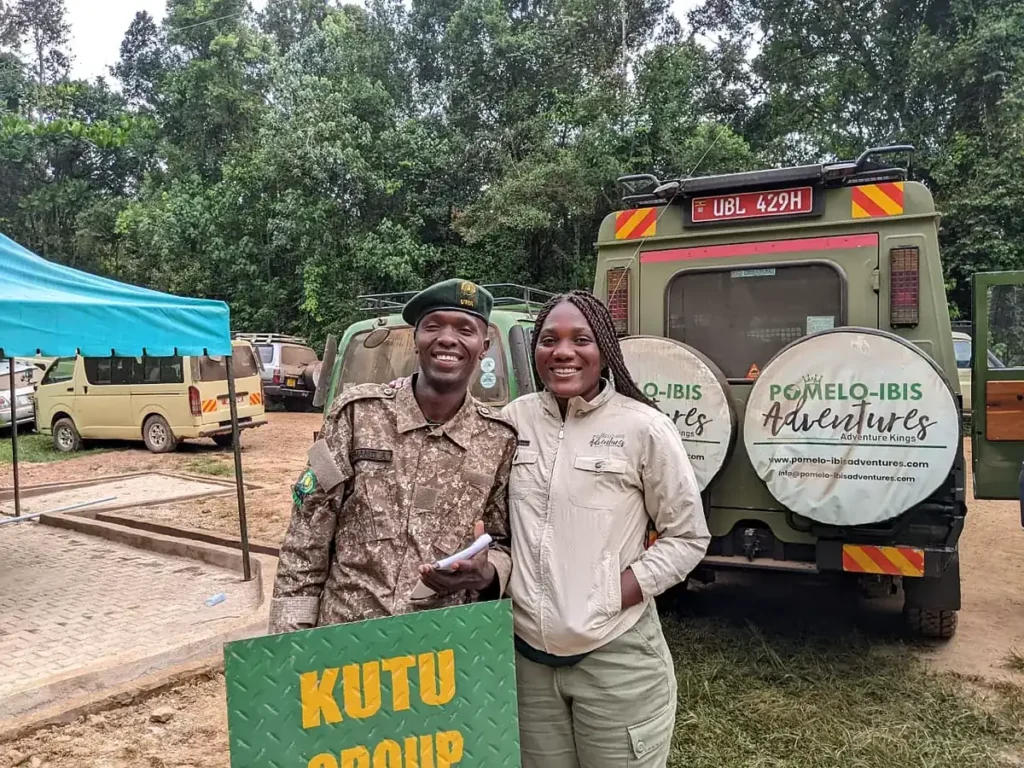
How long does gorilla trekking take? there’s a version of this answer you’ll find on every site: “30 minutes to 8 hours, it depends.” True. Also useless. Here’s the real one, from 18 treks I’ve personally done since we started Pomelo-Ibis in 2019, plus hundreds more we’ve arranged for clients. Real families, real times, real stories, including the one where I nearly cried on my own trek and the one where a gorilla fight almost broke out in front of a couple doing habituation. Quick Answer Phase Typical time Breakfast to jeep 5:30–6:40 AM Drive to park HQ Depends on lodge location. Under 20 min for our guests Registration + cultural welcome 7:00–7:30 AM Grouping + briefing 7:30–9:00 AM Walk/drive to trailhead Varies by sector Hike to the gorillas 20 minutes to 5+ hours Time with the gorillas Exactly 1 hour, no exceptions Return hike Usually faster, but not always Total day: most people are back between 1 PM and late afternoon. On a hard day, later. There is no way to promise a number, and anyone who does is guessing. What our actual mornings look like Most sites describe a generic “7 AM briefing.” Here’s what actually happens, and why. We put our guests in lodges under 20 minutes from park headquarters, deliberately, especially for older clients. Breakfast is 5:30–6:30 AM, and we’re in the jeep by 6:40 so we’re at the gate before 7. That’s not about beating traffic. It’s about getting there before the other operators so we can talk to the rangers who’ve already been in the forest tracking overnight movement, request a family that isn’t deep in, and grab the good walking sticks. If we’ve pre-booked a sedan chair, this is also when we secure the best one. If a client has a mobility limitation, this is when we flag it to the ranger who’ll lead our specific group. Registration starts around 7:30, with a welcome from local community women: songs and dances tied to the culture around the forest, which most guests don’t expect and end up loving. Groups of 8 get assigned around 8:30, briefing runs a few minutes, and you’re usually entering the forest by 9. As Pomelo-ibis, we don’t do packed lunches. You won’t have time or hands free to eat one while trekking, and you can’t eat at all during your hour with the gorillas since your mask stays on the whole time. We feed people a proper breakfast, then a hot lunch back at the lodge afterward. Bring water, at least 2 liters, and a small snack if you want, though most people come back with it untouched. They’re too excited to think about food. The Gorilla Family and sector are a big player in your trek You don’t choose your gorilla family. Rangers assign based on your fitness and where trackers last saw the group that morning. But over 18 treks across all four Bwindi sectors, patterns show up. Buhoma is the sector we recommend for older clients or anyone with mobility concerns, no exceptions. The Rushegura and Mubare families tend to feed close to the starting point, so treks here run shorter and gentler more often than not. I tell every client with limited mobility: sleep at a lodge near Buhoma headquarters and ask for one of these two families. It’s not guaranteed. These are wild animals with territories, not pets waiting for you. But the odds favor you here. Ruhija sits at Bwindi’s highest altitude, and it shows. Slower pace, more rest stops, even for fit people. Rushaga has around 10 families, so permits are easier to get here in a pinch, but duration swings widely family to family. Nkuringo is the hardest, and I know because it broke me on my very first trek. More on that below. . Planning For Comfort Trekking with older parents,or limited mobility? Tell us who’s coming and what they can manage. We’ll match the sector, lodge, and gorilla family to the group, not the other way around. Email to Plan WhatsApp +256 784 240 480 Follow us on Instagram ↗ Find us on Facebook ↗ Katiiti House, Kajjansi · Mutungo Hill, Kampala · Uganda A real comparison: same guests, two families, back to back The last time I was in Rushaga with clients, we tracked two different families on consecutive days. Day one, they tracked the Nshongi Family, entered the forest, and were back in a little over 2 hours total. They found the gorillas in 30–40 minutes, spent their hour, and were out in another 30–40 minutes. Day two, they tracked a different family called Kutu. They entered around 9 AM and didn’t return until after 4 PM. Why? It rained heavily that morning. The family kept feeding deeper into the forest instead of settling, and rain slows everything: the trail turns to mud, people slip, some want to stop out of fear rather than exhaustion. It took roughly 3 hours just to find the gorillas that day, though once found, the hour was the hour, same as always. Same operator, same week, same guests. One trek was 2 hours. The next was 7+. That’s the honest range, not a marketing range. What nobody tells you about the physical toll My first ever trek was Nkuringo, before I had trained for any of this or even knew what training for this meant. The descents nearly finished me. My legs were shaking on the way down, and the pain ran from my waist to my feet. I was with friends and too proud to admit I was struggling, so I said nothing and just endured it. The next morning I couldn’t lift my legs off the bed. I hobbled to breakfast in real pain, got some ointment, and had a friend massage my legs, which helped more than I expected. That trek taught me the hard way that gorilla trekking is a physical event you prepare for, not a walk you show up to. I started training properly after

how long does gorilla trekking take Read More »

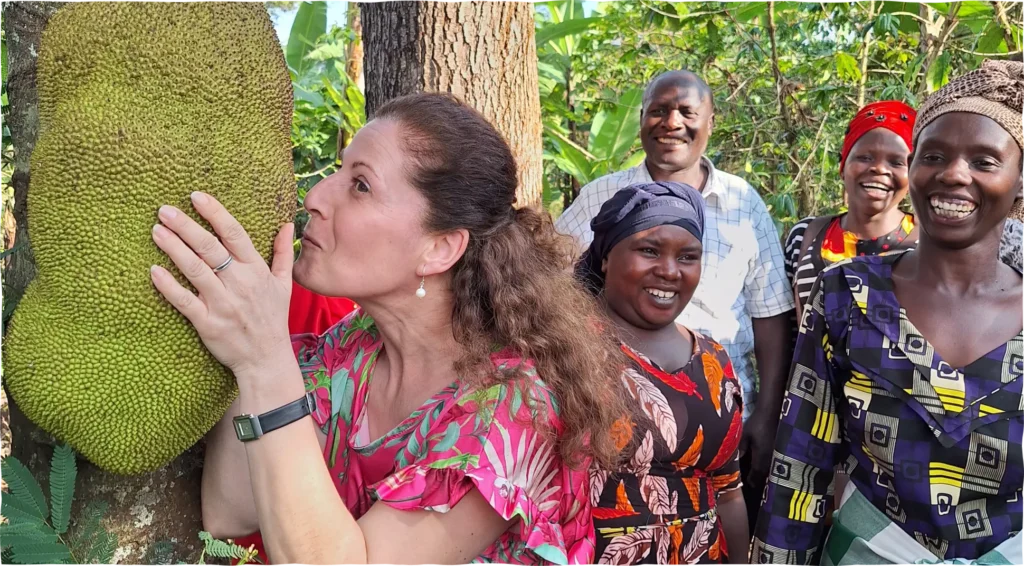
our gueat smelling the jackfruit. with our Leading African Safari Experts

What Makes Uganda Truly Unique? An Honest Perspective

What truly makes Uganda unique? An honest perspective on its people, wildlife, culture, and why the Pearl of Africa leaves a lasting impact. This is an on-the-ground view from a local tour operator. People often ask what makes Uganda unique compared to other African destinations. It’s a fair question. Africa is vast, dramatic, and endlessly diverse; offering incredible landscapes and wildlife across many countries, including Africa’s wildlife destinations. Yet Uganda offers something quietly different. Something visitors don’t always expect, but almost always feel. This isn’t a list of exaggerated claims or polished marketing lines. Instead, it’s an honest perspective on what Uganda feels like when you travel through it slowly, openly, and with curiosity. So, What Makes Uganda Unique Compared to Other African Countries? A Country That Offers So Much in One Journey One of the clearest answers to what makes Uganda unique is how much variety exists within a relatively small country. In a single trip, travelers can experience dense rainforests, open savannahs, towering mountains, and expansive lakes. Gorilla trekking in Bwindi, chimpanzee tracking in Kibale, classic game drives in Queen Elizabeth or Murchison Falls, and boat safaris on the Nile all fit naturally into one itinerary. Unlike destinations where long internal flights are necessary, Uganda connects these experiences through scenic road journeys. Along the way, travelers witness everyday life; villages, farms, markets, and landscapes that change gradually rather than abruptly. Explore our carefully designed Uganda safari itineraries that combine primates, wildlife, and culture in one journey. AN ENCOUNTER LIKE NO OTHER Some encounters stay with you forever. Deep in Uganda’s ancient forests, a remarkable experience awaits. Mountain gorilla trekking offers an opportunity to observe these extraordinary animals in their natural habitat. Bwindi Mountain gorilla trekking Your journey Permits, accommodation and transport ENQUIRE ABOUT GORILLA TREKKING → Uganda Feels Real, Not Designed For Tourists Uganda does not feel overly packaged for tourism, and that is part of its charm. Life unfolds as it normally would, whether visitors are present or not. Children walk to school. Fishermen cast their nets at sunrise. Roadside markets operate without performance or pretense. These moments aren’t staged for cameras, they simply happen. Because of this, travel in Uganda feels grounded and human. While things may not always run with clockwork precision, the experience feels genuine. For many visitors, this authenticity becomes one of the strongest reasons Uganda’s uniqueness stays with them long after they leave. Because of this authenticity, many travelers choose to travel with a local Uganda tour operator who understands the country beyond guidebooks The Pace Is Slower, In a Good Way Another subtle but powerful part of what makes Uganda unique is its rhythm. Life moves more slowly here. Conversations are unhurried. Meals are shared without rushing. Days unfold naturally instead of being tightly scheduled. Rather than chasing highlights, visitors often find themselves becoming more present. This slower pace creates space to reflect, observe, and connect both with people and with the environment. This rhythm is especially noticeable during longer safaris planned around the best time to visit Uganda, when weather and travel flow naturally. The People Are the Strongest Impression Uganda’s greatest asset is not its wildlife or landscapes. It is its people. Hospitality here feels instinctive rather than rehearsed. Conversations start easily. Laughter comes naturally. Help is often offered without being asked. Many visitors say they felt comfortable and safe before they could explain why. That sense of ease is not accidental. It comes from a culture shaped by community, resilience, and openness. For many, this human connection becomes the clearest answer to what makes Uganda unique. DISCOVER THE PEARL OF AFRICA Uganda is waiting to be discovered. Reading about Uganda is one thing. Experiencing its extraordinary wildlife, ancient forests, beautiful landscapes and warm hospitality is something else entirely. Wildlife Game drives and boat safaris Adventure Gorilla trekking and rainforest walks LET’S PLAN YOUR UGANDA SAFARI → A Cultural Crossroads Uganda sits at the intersection of East Africa, Central Africa, and the Great Lakes region. This position has shaped its languages, food, music, and traditions. Across the country, cultures shift subtly from region to region. Local customs, storytelling, and faith play an active role in daily life. Rather than being preserved only for ceremonies, culture is lived openly and continuously. This depth adds layers to the travel experience, making Uganda feel complex, grounded, and alive. An Honest Perspective! What Uganda Is and Isn’t Uganda is not the most luxurious destination in Africa, and it does not try to be. While high-end lodges exist, they are not everywhere. Some roads are rough. Infrastructure can be inconsistent. However, these realities also filter the type of traveler Uganda attracts. Those who value authenticity, connection, and meaning tend to find that these so-called imperfections enhance the journey rather than diminish it. Understanding this balance is essential to understanding what makes Uganda unique. Travel here rewards patience, curiosity, and thoughtful planning, especially for those on a first-time safari in Uganda. Wildlife That Feels Personal and Close Uganda’s wildlife encounters feel intimate rather than distant. Animals here don’t exist behind layers of spectacle. Elephants cross roads without warning. Hippos graze near fishing communities. In Bwindi, mountain gorillas don’t perform for visitors, they acknowledge them, briefly and calmly, before returning to their lives. Gorilla trekking, in particular, reshapes how people understand wildlife experiences. The quiet, the proximity, and the mutual awareness create moments that feel humbling and deeply emotional. For many travelers, this is a defining answer to what makes Uganda unique. Few experiences compare to mountain gorilla trekking in Bwindi, where encounters feel quiet, respectful, and deeply moving. So, What Makes Uganda Truly Unique? You may now decide. Uganda does not shout for attention. It doesn’t overwhelm visitors with spectacle or excess. Instead, it invites them in quietly. It slows you down.It connects you to people.It humbles you through nature. And long after the journey ends, it lingers..not as a checklist of places seen, but as a feeling remembered. That is what makes Uganda

What Makes Uganda Truly Unique? An Honest Perspective Read More »

how to get a gorilla trekking permit in Uganda or Rwanda

How to Get a Gorilla Trekking Permit in Uganda or Rwanda

How to Get a Gorilla Trekking Permit in Uganda or Rwanda How to get a gorilla trekking permit in Uganda or Rwanda requires booking your spot months in advance through an authorized tour operator like Pomelo-ibis Adventures. Because government wildlife authorities do not sell permits directly to individual travelers at park gates, working with a licensed local operator guarantees your official reservation with the Uganda Wildlife Authority or Rwanda Development Board. At Pomelo-ibis Adventures, we handle every step of your permit acquisition, lodge matching, and transport logistics. Why do wildlife authorities require a gorilla trekking permit? Wildlife authorities require a gorilla trekking permit to regulate daily human interaction with endangered mountain gorillas. Strict capacity limits protect gorilla health, prevent habitat stress, and directly fund regional conservation efforts. The Uganda Wildlife Authority (UWA) and the Rwanda Development Board (RDB) issue these permits exclusively to authorized tour operators. How to get a gorilla trekking permit in Uganda or Rwanda step by step? Getting a gorilla trekking permit requires reserving your spot months in advance through an authorized tour company. Demand stays exceptionally high, particularly during peak dry seasons like July and January. Working with Pomelo-ibis Adventures ensures your permits match your lodge locations and transportation schedule without logistical errors. Licensed Local Ground Operator Plan Your Gorilla Trek with Local Experts Navigating sector choices, passport submissions, and regional permit allocations doesn’t have to be overwhelming. Pomelo-ibis Adventures provides direct UWA & RDB permit handling with private, seamless transfers. Book Your Trekking Permit Today → Direct Inquiry: lindah@pomelo-ibisadventures.com | WhatsApp: +256 784 240 480 What is the gorilla habituation permit in Uganda? The gorilla habituation permit in Uganda is a specialized pass that allows visitors to spend four full hours with a semi-wild gorilla family. Available exclusively in the Rushaga sector of Bwindi Impenetrable National Park, this experience costs 1,500 USD per person. It offers an extended, immersive alternative to the standard one-hour trekking permit. How do Uganda and Rwanda gorilla permits compare in cost and convenience? Uganda permits provide exceptional value for budget-conscious travelers, while Rwanda permits offer faster access from an international airport at a premium price point. Combining a cross-border drive from Kigali to Bwindi allows travelers to access Uganda’s lower permit price with a shorter drive time. The table below outlines the core differences between each destination. Permit Feature Uganda Gorilla Permit Rwanda Gorilla Permit Official Permit Cost 800 USD 1,500 USD Primary National Park Bwindi Impenetrable & Mgahinga Volcanoes National Park Drive Time from Major Airport 8 to 9 hours from Entebbe (EBB) 2.5 to 3 hours from Kigali (KGL) Bwindi Sector Assignment Requires matching lodge to sector Single entrance trailhead at Kinigi Alternative Habituation Option Yes ($1,500 USD for 4 hours) Not Available Ready to Secure Your $800 Gorilla Permit? Permit allocations in Bwindi and Volcanoes National Park sell out months in advance. Our local team at Pomelo-ibis Adventures accesses government portals directly to secure your tracking dates, sector choices, and lodge arrangements with zero friction. Check Real-Time Availability → When should you secure your gorilla tracking reservation? You should secure your permit 6 to 12 months before your intended departure date. Peak season availability fills up fast because global agencies reserve blocks up to a year ahead. Securing permits early guarantees your choice of Bwindi’s four distinct sectors (Buhoma, Ruhija, Rushaga, or Nkuringo), preventing long 3-hour transfers on trek day. Frequently Asked Questions About Gorilla Trekking Permits What does a sample 3-day Kigali-to-Bwindi gorilla safari look like? A 3-day cross-border safari allows you to fly into Kigali International Airport Click to open side panel for more information , secure Uganda’s 800 USD permit rate, and cut total drive time down to just four hours each way. At Pomelo-ibis Adventures, we handle every detail from your border transfers to custom lodge reservations. Safari Feature Kigali to Bwindi Route Pickup / Drop-off Kigali International Airport Click to open side panel for more information (KGL) Drive Time 4 hours each way (vs. 9 hours from Entebbe) Required Visas East Africa Tourist Visa ($100 USD covers Rwanda & Uganda) Custom Gorilla Safaris Built Around Your Schedule Save $700 on permit fees without spending 9 hours on the road. Let us handle your cross-border logistics, private 4WD transport, and handpicked forest lodging. Request Custom Quote Explore Safari Packages

How to Get a Gorilla Trekking Permit in Uganda or Rwanda Read More »

The Truth About Mountain Gorilla Trekking: What I Wish I Knew!

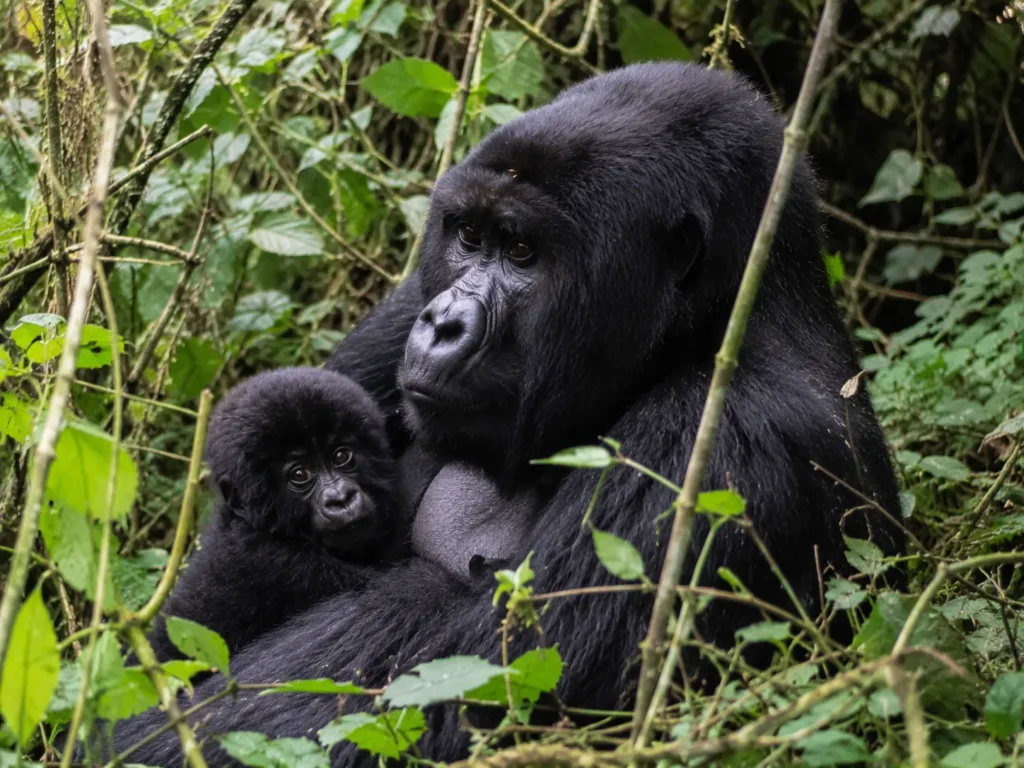
Mountain Gorilla Trekking in Uganda: The Unexpected Thrills You’ll Love You’ve dreamed of Mountain Gorilla Trekking in Uganda your whole life. You picture dense forests, muddy trails, and that moment when you lock eyes with a massive silverback. What you might not expect, though, is how much fun it actually is! I wish someone had told me this before I set off: Gorilla trekking isn’t just an intense, muddy adventure. It’s also full of unexpected joys that will leave you grinning from ear to ear! Yes, even the senior citizens and those with mobility issues can still trek the gorillas in the forest with the help of sedan chairs and potters. You can read our full guide about gorilla trekking for the elderly, seniors, immovable and disabled here.. 1. Unexpected Fun During Your Mountain Gorilla Trekking Experience You’d think the jungle would be all silence and seriousness, but guess what? Your trekking group is often a riot! Guides crack jokes to keep spirits high, and everyone shares their excitement. One minute, you’re catching your breath from the steep climb, and the next, you’re laughing with new friends over how you almost mistook a rustling bush for a gorilla. 2. The Silverback Stare Isn’t Scary. It’s Mind-Blowing When you finally spot the family, your heart might skip a beat. But that intimidating silverback? He’s surprisingly calm and almost… thoughtful. There’s something mesmerizing about watching him observe his surroundings, completely unbothered by your presence. The guides remind you to stay quiet, but honestly, you’re too awestruck to make a sound. 3. Baby Gorillas Steal the Show on Your Uganda Gorilla Trek I expected to be impressed by the towering silverback, but it’s the babies that stole my heart! They’re curious, playful, and downright hilarious. One little guy kept tumbling around his mom, while another tried to mimic the adults’ chest-thumping with tiny, awkward slaps. It’s like watching nature’s cutest comedy show. 4. The Tranquil Forest and Its Serene Beauty During Gorilla Trekking in Uganda Yes, mountain gorilla trekking can be intense, but the forest itself is pure serenity. Birdsong floats through the air, and the smell of damp earth grounds you in the moment. Even when your legs are burning from the climb, there’s something so peaceful about moving through this ancient landscape. 5. Your Victory Dance After Completing the Mountain Gorilla Trekking Adventure When you finally reach your trekking goal and see the gorillas, there’s a sense of victory that words can’t capture. I did a little dance right there in the forest, and I wasn’t the only one. It’s pure, unfiltered joy. The journey is tough, but every single step is worth it. Final Thoughts: If you’re considering mountain gorilla trekking in Uganda, don’t stress too much about the challenges. Yes, it’s physically demanding, but the unexpected fun and pure exhilaration make it unforgettable. Plus, you’ll leave with a story that’s as thrilling as it is heartwarming. Would I do Mountain Gorilla Trekking in Uganda again? Absolutely. And I’d dance even harder the next time!

The Truth About Mountain Gorilla Trekking: What I Wish I Knew! Read More »

Free itinerary in under 24 hours.
Chat with Lindah on WhatsApp